Altus Agro Sustainable Agriculture for Palm
Altus Agro in partnership with our principal UAL Biotech introduces a novel sustainable agriculture platform for palm oil plantations.
The ZYMO OPT platform is a paradigm shift for the palm oil industry making organic agriculture economically attractive on a large scale while reversing environmental concerns attached to chemical fertilizer and pesticide usage.
Altus Agro will market and distribute ZYMO OPT products to plantations and farmers in South East Asia.
Altus Agro for Palm Current Situation in Palm Oil Plantations
Chemical Fertilizers
- Greenhouse gases emission
- Water pollution
- Destruction of bio-diversity
- Soil degeneration – acidic soils
Increasing Costs
Market Demand
Altus Agro for Palm ZYMO - Regenerative Agriculture Platform
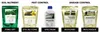
Zymo's game changing value proposition:
- 100% organic at same or lower cost per HA vs current chemical fertilizers spending
- Only 2 simple applications per year (40g per tree) – lower application cost with manpower & other cost savings such as fuel and logistics
- Potential yield increase - expected increase of up to approximately 1MT per HA
- Removing the harmful effects chemical fertilizers to the land. In 100,000 hectare of palm, UAL eliminates the use 100M kg of chemical fertilizer
- Improve environmental sustainability - 100% elimination of greenhouse gas emissions linked to fertilizer usage
Altus Agro for Palm Proven Results in Commercial Trials
Field trial in palm oil plantations in Kalimantan, on six year-old palm trees planted in peat soil from Jan 2019 – Jan 2021:
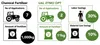
Altus Agro for Palm Evolution of Fertilizer Market
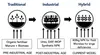
Yield is inconsistent, and chemicals create multiple concerns.
- Complete Elimination of Chemical NPK Fertilizers
- 5 -10 Kgs per Hectare compared to 1MT of Chemical Fertilizer
- Yield at par or more compared Chemical Fertiliser
- Cost at par or lower to Chemical Fertilizer
- Scalable Organic Farming
Altus Agro for Palm The ZYMO OPT Solution
Fixing the issues that inhibit healthy soils (such as pH, organic matter, moisture retention) leads to a wholistic approach to nutrient management. This is how the technology provides a certified organic alternative to NPK addition at price parity while maintaining yields. The overall improvement in soil health leads to improved yields till it optimizes potential. The net result leads to Carbon retention in soils and helps reverse soil degradation.
Soil - pH Correction
- Current Solution
- Acidic soils – lime additives are added.
- Alkaline soils – ammonia/sulphur are added.
- ZYMO
- Key enzyme corrects the pH.
- Soil organic matter.
Pest/Disease Control
- Current Solution
- Chemical pesticides and herbicides.
- ZYMO
- Less prone to disease due to healthy soil and plantation ecosystem. In case of pest control biological solutions at par with chemical costs are provided.
Sustainability
- Current Solution
- Not sustainable.
- ZYMO
- Soil – remediation of degraded soil.
- Air - reduction of NO2 emission.
- Water – reduction of leaching of chemical into ground water.
- Supports RPSO compliance.
Nutrient Supply
- Macro – N, P, K, Mg
- Micro – Mn, Bo, Zn
- Current Solution
- Synthetic N, P, K are applied.
- ZYMO
- Enables nitrogen fixing bacteria to provide the N demand.
- P from the organic matter in the soil is made available to plants.
- K from the soil minerals are mobilized through right soil moisture condition.
Profitability
- Yield & cost.
- Current Solution
- Diminishing yields and/or increasing nutrient input. Average six applications per year.
- ZYMO
- Yield at par if not higher.
- Cost is lower than current solution.
- Only two applications per year.
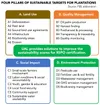
Altus Agro for Palm Value Proposition for RSPO Certification
RSPO certification is an important validation and certificate that helps buyers align their sustainability goals with their suppliers. Using ZYMO will directly improve the scores for environmental protection, ie. eliminate harmful chemicals in fertilizer and pesticide use, improving soil fertility and reduce GHG emissions related to fertilizer and fuel usage.
It will also indirectly enable the improvement in areas like peat land and small holders involvement.
Environmental Protection:
- Improved soil fertility through certified organic bio-fertilizers.
- Proven reduction in GHG emissions.
- Biodiversity promotion through water and soil habitat recovery, pesticide avoidance and if needed use of non destructive organic products for pest and disease control.
- Prevent water pollution from chemicals.
Land Use:
- Help manage release of CO2 from peat lands.
- Promote biodiversity through use of non destructive pesticides.
Social Impact:
- Higher yields for small holder farmers with continued improvement of soil fertility.
- Involvement of youth in modern farming and most importantly promote food security.